


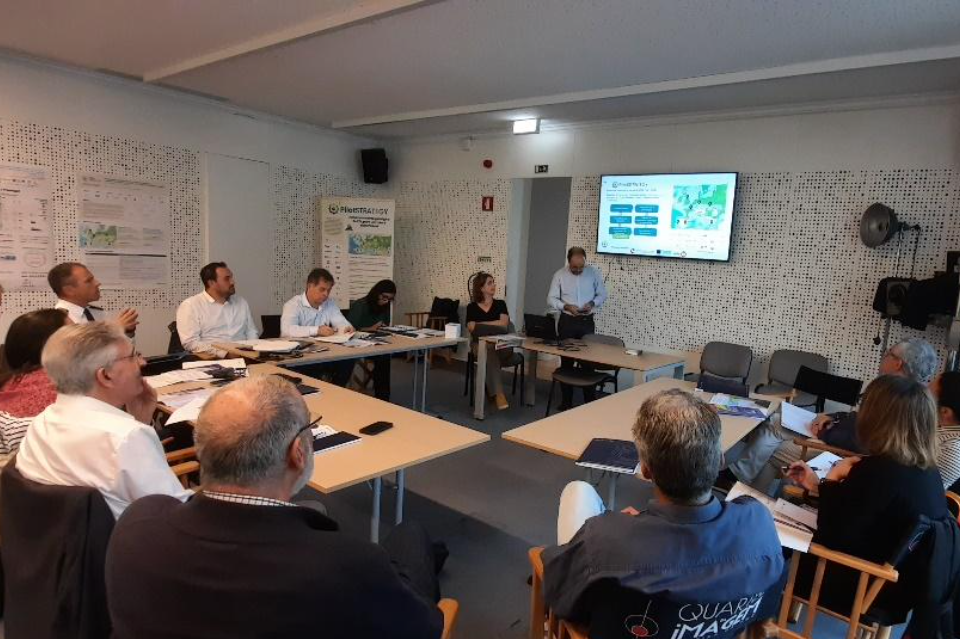
Between 2023 and 2026, the PilotSTRATEGY project organised an extensive series of Regional Stakeholder Committee (RSC) meetings to explore the societal, regulatory and technical dimensions of Carbon Capture and Storage (CCS) across five European regions. These brought together nearly 300 stakeholders through 20 meetings in Portugal, Spain, France, Greece and Poland. The workshops formed a core part of the project’s trans- and interdisciplinary approach, ensuring that regional (and national) perspectives directly informed the assessment of potential CCS pilot sites.
Designed as interactive 2–3-hour workshops, the RSC meetings created structured spaces for dialogue between various stakeholders in the CCS area, such as industry representatives, public authorities, researchers, civil society organisations and local community actors – with a focus on local actors relevant for CCS in the respective region. Across the Lusitanian Basin at Figueira da Foz in Portugal, the Ebro Basin in Spain, the Paris Basin in France, Western Macedonia in Greece and Upper Silesia in Poland, discussions addressed social acceptance, geological suitability, environmental monitoring, regulatory frameworks, transport logistics, and long-term liability.
The engagement process was carefully tailored to each region. In Portugal, hybrid and online formats enabled participation from both national and local actors. The main topics of discussion were the achievements of the technical tasks of the project. Social science results and ecological impacts were also discussed. In Spain, face-to-face sessions fostered in-depth exchanges on perceived risks, trust, community compensation and co-creation of a community engagement plan. In France, discussions focused on subsurface knowledge and siting criteria while being impacted by political dynamics. Meanwhile, meetings in Greece and Poland concentrated on social acceptance and regulatory readiness in regions undergoing broader industrial transitions.
Across regions, stakeholders raised detailed questions on risk and safety, environmental impacts, financial feasibility, long-term liability and alignment with European regulations. They also highlighted broader concerns: potential conflicts with existing economic activities, impacts on biodiversity, and the need to situate CCS within wider decarbonisation strategies. Feedback from stakeholders directly shaped subsequent meetings and citizen engagement activities, demonstrating the iterative and responsive nature of the process. Essential aspects of a trustworthy stakeholder dialogue were transparent communication, early engagement and reliable technical information. Moreover, stakeholders appreciated the opportunity to come together with other relevant stakeholders for CCS topics.
By combining social sciences expertise with technical research teams, PilotSTRATEGY established durable regional networks and fostered informed dialogue around complex climate mitigation technologies. The experience provides practical recommendations for future CCS initiatives on stakeholder engagement: build long-term relationships, continuously consider stakeholder concerns and answer their questions honestly (without promoting a one-sided view), ensure transparency about project scope and uncertainties, integrate local knowledge, and remain adaptable to shifting political and economic contexts.
Read the full report here: https://zenodo.org/records/18772600